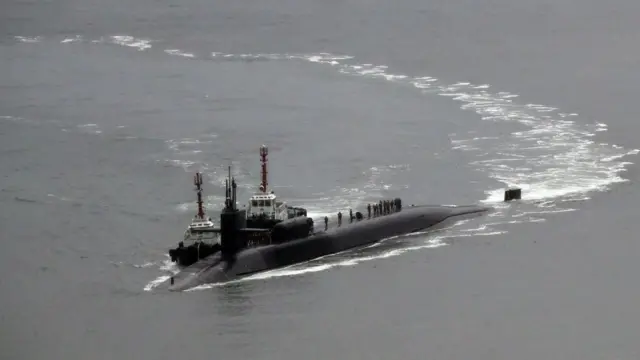
In a major shift in military alliances, the United States and South Korea have agreed to jointly develop nuclear-powered submarines, a move that is expected to significantly bolster South Korea’s naval capabilities. This landmark agreement has already drawn sharp criticism from North Korea, which views the partnership as a direct threat to its security and a destabilizing factor in the region. The deal represents a new chapter in the growing military collaboration between the US and South Korea, but it also escalates tensions with Pyongyang, which has long been wary of such advancements.
Nuclear-powered submarines are a symbol of military strength, offering stealth, long-range capabilities, and strategic deterrence. The decision by the US and South Korea to develop these advanced vessels is seen as part of a broader effort to counter growing threats in the region, particularly from North Korea’s nuclear weapons program. As the tensions rise, the agreement may have far-reaching implications not only for security dynamics in East Asia but also for global arms control efforts.
The Rationale Behind the Nuclear Submarine Agreement
The deal between the US and South Korea to develop nuclear submarines is rooted in several strategic objectives. First and foremost, it enhances South Korea’s ability to defend itself against potential threats, especially from North Korea, which has been rapidly advancing its missile and nuclear capabilities.
The United States has long been an ally of South Korea, providing military support through joint exercises and defense initiatives. However, this new agreement takes their partnership to a new level, as South Korea will now have access to one of the most powerful and stealthy naval assets available. These submarines, capable of operating for extended periods without surfacing, will enhance South Korea’s ability to project power and maintain a credible deterrent against North Korea’s increasingly aggressive posture.
Additionally, the US and South Korea have both expressed concerns over China’s growing influence in the region, and the development of nuclear submarines is seen as a way to counterbalance China’s own military ambitions. By bolstering its naval capabilities, South Korea hopes to maintain a strategic edge over regional adversaries, while also ensuring that it remains a key player in the security architecture of the Asia-Pacific region.
North Korea’s Furious Reaction
As expected, North Korea has reacted furiously to the news of the US-South Korea nuclear submarine deal. The regime in Pyongyang has long considered the US military presence in South Korea to be a threat to its sovereignty and has consistently protested joint military drills and defense partnerships between the two countries.
North Korea’s official state media condemned the agreement, labeling it a “grave threat” to the peace and stability of the Korean Peninsula. Pyongyang’s nuclear ambitions have long been a point of contention in the region, and the prospect of South Korea acquiring nuclear-powered submarines only heightens the sense of insecurity felt by North Korea’s leadership.
In response, North Korea has threatened to take “appropriate measures” to protect its national security, which may include further missile tests or even the resumption of its nuclear weapons program. The heightened tensions have raised concerns about the potential for an arms race in East Asia, as countries like Japan and China may feel compelled to enhance their own military capabilities in response to the US-South Korea alliance.
Regional Implications and Security Concerns
The decision to build nuclear submarines comes at a time of heightened instability in East Asia. North Korea’s continued missile and nuclear tests, coupled with its increasingly provocative rhetoric, have made security in the region a major concern for neighboring countries and the international community. The US-South Korea nuclear submarine deal adds a new layer of complexity to this volatile situation, as it represents a direct challenge to North Korea’s ambitions.
However, it also has broader implications for regional security dynamics. While the US and South Korea view the submarines as a deterrent against North Korea, the development of such powerful weapons may also trigger a new arms race in the region. Nations like China, Japan, and even Russia may seek to enhance their own naval and military capabilities in response to the increased presence of nuclear-powered submarines in the region.
For Japan, the deal may serve as a reminder of its own security challenges in the face of North Korea’s missile and nuclear threats. Tokyo has long relied on the US for its security, and the idea of South Korea acquiring advanced nuclear-powered submarines could prompt Japan to rethink its own defense strategy, particularly regarding its naval forces.
China, meanwhile, has already voiced its concerns over the growing military presence of the US in the Asia-Pacific region. Beijing is keen to maintain its dominance in the region and may interpret the development of these submarines as a counter to its expanding naval power. As a result, the US-South Korea nuclear submarine agreement could further exacerbate tensions between the US and China, which has been ramping up its military activities in the South China Sea and beyond.
The Future of the US-South Korea Partnership
Looking ahead, the US-South Korea nuclear submarine deal is likely to strengthen the already close military partnership between the two nations. The presence of these submarines in South Korean waters will serve as a powerful reminder of the US commitment to the defense of its allies, particularly in the face of growing threats from North Korea and China. Additionally, it may mark the beginning of a new phase in the region’s military landscape, one in which nuclear-powered submarines play a central role in maintaining balance and deterrence.
However, the agreement also poses significant challenges. It is likely to provoke further tensions with North Korea, which may escalate its provocations in response. The risk of an arms race in East Asia could also lead to a more unstable security environment, with countries feeling the need to enhance their military capabilities in an increasingly competitive region.
At the same time, the agreement could deepen US-South Korea ties and solidify their position as key players in the global security order. The success of the nuclear submarine deal will ultimately depend on how effectively the two countries navigate the complex diplomatic and military challenges posed by North Korea, China, and other regional actors.
Conclusion:
The US-South Korea agreement to develop nuclear-powered submarines marks a significant step in their military collaboration, while also sparking strong opposition from North Korea. This deal highlights the growing security concerns in East Asia, particularly regarding North Korea’s nuclear ambitions and China’s expanding military presence. As tensions escalate, the region faces the possibility of a new arms race, with nuclear submarines playing a central role in the evolving military dynamics of the Asia-Pacific..