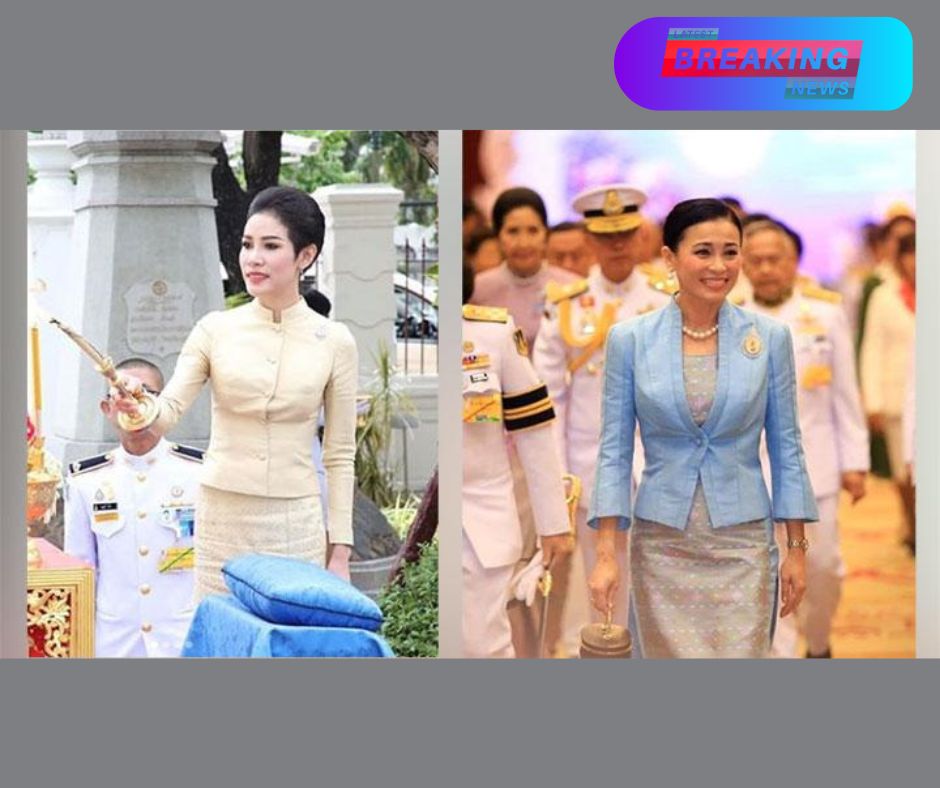
The Thai royal fashion rivalry has drawn global attention, as observers compare the public style of the King’s legal wife and his royal consort. While neither woman openly competes for attention, their appearances at formal events, ceremonies, and state functions have fueled discussion about elegance, symbolism, and the role clothing plays within the modern Thai monarchy. This is not merely about fashion preferences—it is a visual language shaped by tradition, hierarchy, and public expectation.
Fashion as a Royal Statement
In royal households, clothing is never just clothing. Every color, fabric, and silhouette carries meaning. In Thailand, where monarchy is deeply tied to national identity, attire serves as a powerful form of communication.
The Queen’s wardrobe often reflects continuity and stability. Her outfits are carefully curated to represent unity, dignity, and respect for heritage. The royal consort, on the other hand, is frequently associated with a more contemporary aesthetic. This contrast has led many to frame their appearances as a quiet style comparison, even if no rivalry is intended.
What emerges is a fascinating study of how fashion mirrors position and responsibility within the royal structure.
The Queen’s Style: Tradition and Authority
The Queen’s fashion choices tend to emphasize classic Thai elegance. She frequently wears traditional silk ensembles, intricate embroidery, and soft, regal color palettes. These outfits are often designed by Thai artisans, reinforcing cultural pride and national craftsmanship.
Her silhouettes are formal and restrained, prioritizing grace over trend. Jewelry is selected with purpose—often symbolic pieces connected to royal lineage or national heritage. Hairstyles and makeup remain understated, ensuring the focus remains on the institution rather than the individual.
This approach reinforces her role as the embodiment of continuity and royal legitimacy.
The Royal Consort’s Look: Modern and Expressive
In contrast, the royal consort’s public image often leans toward modern refinement. While she also wears traditional attire during ceremonial occasions, her overall style includes more tailored designs, contemporary cuts, and bolder color choices.
Western-inspired gowns, structured jackets, and statement accessories appear more frequently in her wardrobe. These elements project confidence and adaptability, aligning with a younger, more global audience.
Rather than diminishing tradition, this style evolution reflects how royal presentation can adapt to changing times while still respecting cultural boundaries.
Media and Public Perception
Public discussion around the Thai royal fashion rivalry is amplified by media coverage. International outlets often frame their appearances as a comparison, while domestic commentary tends to be more cautious due to cultural sensitivities surrounding the monarchy.
Social media plays a significant role in shaping perception. Photos circulate widely, inviting commentary on elegance, posture, and styling. Admirers often praise both women for different reasons—one for timeless grace, the other for modern sophistication.
These reactions reveal how fashion becomes a proxy for broader conversations about tradition versus change.
Symbolism Over Competition
It is important to recognize that royal fashion is not a contest in the conventional sense. Each woman’s attire aligns closely with her designated role. The Queen’s clothing reinforces authority and ceremonial importance, while the royal consort’s style reflects support, visibility, and adaptability.
Comparisons arise largely from public curiosity rather than intentional rivalry. In many ways, their contrasting aesthetics complement each other, presenting a multifaceted image of the monarchy that balances heritage with modern relevance.
Elegance, in this context, is defined less by personal taste and more by appropriateness and symbolism.
Cultural Expectations and Boundaries
Thai culture places immense value on respect, hierarchy, and visual harmony. Royal attire must adhere to unspoken rules that dictate modesty, formality, and cultural alignment.
Both women operate within these boundaries, even when their styles differ. The Queen’s looks emphasize ceremonial correctness, while the royal consort’s outfits introduce subtle innovation without crossing cultural lines.
This careful balance explains why their fashion choices attract admiration rather than controversy.
Who Is the Most Elegant?
The question of “who is more elegant” ultimately depends on how elegance is defined. If elegance means timeless tradition, cultural symbolism, and regal restraint, the Queen naturally stands out. If elegance is viewed as confidence, adaptability, and modern refinement, the royal consort offers a compelling image.
Rather than ranking one above the other, it may be more accurate to see their styles as representing two complementary dimensions of royal elegance—each necessary for a monarchy navigating both history and the present.
Conclusion
The Thai royal fashion rivalry is less about competition and more about contrast. Through clothing, both the Queen and the royal consort communicate their roles, responsibilities, and connection to Thai identity. Their distinct styles highlight how fashion within the monarchy serves as a powerful visual language.
In the end, elegance is not a crown won by comparison but a reflection of purpose. And in that sense, both women succeed—each in her own distinctive and meaningful way.