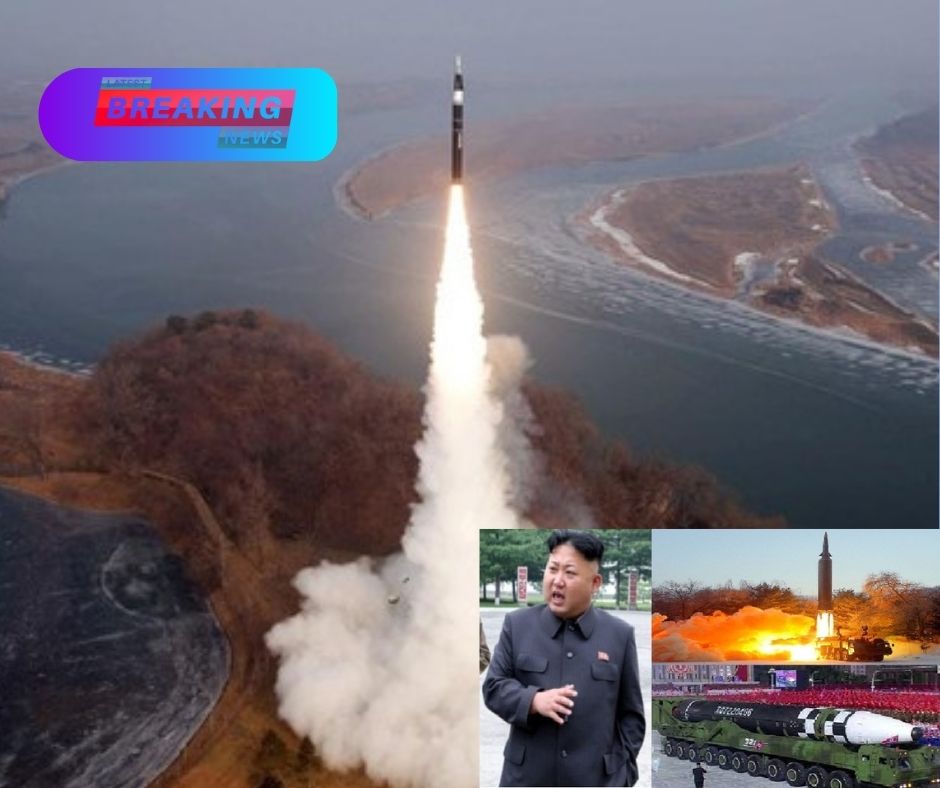
Kim Jong Un Plans Major Missile Production Increase Next Year
Kim Jong Un missile production is set to intensify next year after North Korea’s leader issued instructions to expand output across key weapons facilities. The announcement highlights Pyongyang’s intention to strengthen its military posture amid persistent regional tensions and international pressure.
Speaking during an inspection of defense manufacturing sites, Kim Jong Un stressed the importance of scaling up production capacity while improving technical reliability. His remarks made clear that missile forces remain central to North Korea’s national security strategy going forward.
A Clear Signal of Long-Term Military Planning
Unlike short-term missile tests designed to attract global attention, Kim Jong Un missile production plans indicate long-term strategic thinking. By focusing on sustained output rather than isolated launches, Pyongyang aims to ensure that its arsenal remains ready for deployment at any time.
Analysts believe this approach allows North Korea to maintain operational flexibility. A larger inventory reduces dependence on constant testing while enabling the military to rotate systems and preserve readiness. This strategy also strengthens deterrence by emphasizing availability rather than spectacle.
Industrial Expansion and Efficiency Goals
Boosting missile production requires significant industrial coordination. Kim Jong Un reportedly called for better efficiency across assembly lines, urging workers to meet higher targets without compromising quality.
Modernization efforts may include streamlined workflows, upgraded machinery, and tighter quality checks. Even under sanctions, North Korea has demonstrated an ability to adapt its manufacturing processes through domestic innovation and simplified designs.
This focus on productivity reflects a broader policy push to align military objectives with industrial performance.
Missile Systems Likely to See Increased Output
Although officials have not released technical details, several missile categories are expected to benefit from the production surge:
Tactical and Regional Missiles
Short- and medium-range systems remain essential for regional deterrence. Expanding these inventories allows faster deployment and wider geographic coverage.
Solid-Fuel Missile Platforms
Solid-fuel technology shortens launch preparation times and enhances survivability. Increasing production of such systems improves response capability during crises.
Long-Range Strategic Missiles
While more complex, continued development of long-range missiles reinforces Pyongyang’s claims of possessing a credible strategic deterrent.
Domestic Messaging and Leadership Image
Kim Jong Un missile production plans also serve a domestic political function. State media often presents defense achievements as evidence of strong leadership and national resilience.
By highlighting industrial success, the regime promotes unity and justifies economic sacrifices. Missile production becomes not only a security measure but also a symbol of technological self-reliance.
This narrative plays a key role in maintaining internal support during periods of hardship.
Regional Reactions and Security Concerns
Neighboring countries are closely watching North Korea’s preparations for increased missile output. South Korea and Japan are likely to view the move as a potential escalation, prompting further investment in missile defense systems.
The United States may respond with diplomatic pressure, sanctions enforcement, or joint military exercises. Meanwhile, China and Russia typically urge restraint while opposing actions that could destabilize the region further.
This divergence in responses complicates international efforts to manage the situation.
Sanctions Pressure and Strategic Adaptation
Despite longstanding sanctions, Kim Jong Un missile production continues to advance. North Korea has shown resilience by relying on domestic supply chains, alternative sourcing, and incremental technological improvements.
While restrictions limit access to cutting-edge components, the regime compensates through volume, repetition, and gradual refinement. This adaptive approach allows continued progress even under economic constraints.
As a result, sanctions alone have not halted weapons development.
Strategic Implications for the Year Ahead
Looking ahead, increased missile production could reshape North Korea’s military behavior. Fewer test launches may be needed if operational stockpiles grow large enough to sustain readiness.
At the same time, a larger arsenal enhances bargaining leverage. Pyongyang may use its expanded capabilities to influence future negotiations or deter perceived threats.
However, higher production levels also raise the risk of miscalculation, particularly during periods of heightened tension.
Conclusion: A Calculated Step Toward Expanded Deterrence
Kim Jong Un missile production plans for next year reflect a deliberate effort to strengthen North Korea’s military foundation. By prioritizing output, efficiency, and readiness, the regime signals confidence in its long-term strategy.
Rather than focusing solely on demonstrations, Pyongyang appears committed to building a durable arsenal capable of shaping regional security dynamics. As next year approaches, the international community will closely monitor how this policy unfolds and what it means for stability in East Asia.