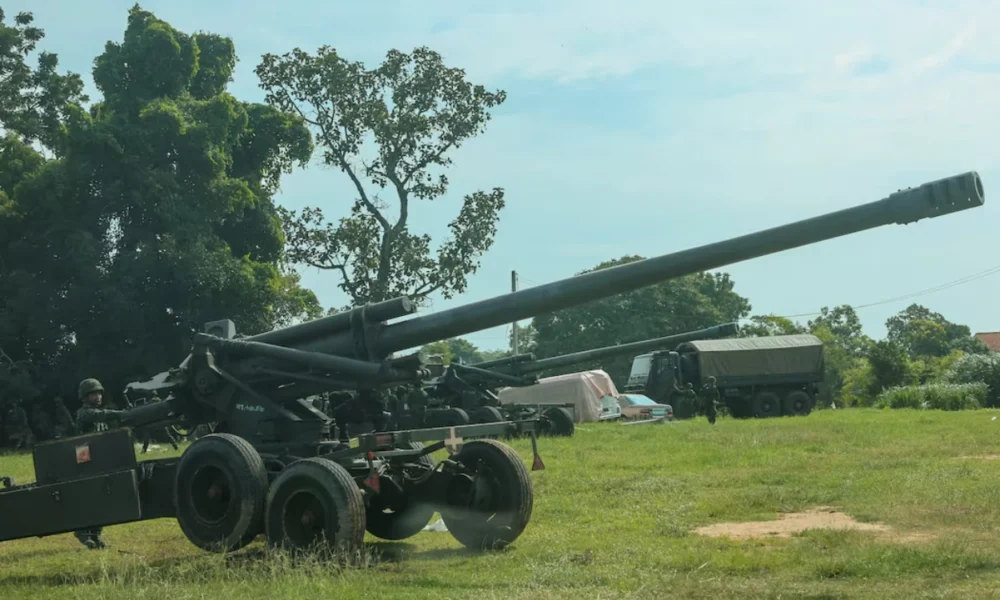
Reports of a Cambodia Thailand border clash have raised alarms across Southeast Asia after an exchange near the frontier reportedly left a Thai soldier injured. The incident, described by officials as a bombardment from the Cambodian side, has sharpened attention on a sensitive border area long marked by overlapping claims and periodic flare-ups. The topic is immediately clear: a localized security incident now risks broader diplomatic consequences if not carefully managed.
While both governments have urged calm, the episode underscores how quickly tensions can rise along contested borders.
What Happened at the Border?
According to preliminary statements from Thai security sources, artillery or explosive fire originating near the Cambodian side landed close to a Thai patrol position, injuring one serviceman. The injured soldier was evacuated for medical treatment and was reported to be in stable condition.
Authorities have emphasized that investigations are ongoing to determine the exact sequence of events, including whether the fire was intentional, retaliatory, or the result of a misunderstanding during troop movements along the frontier.
The Area of Tension
The incident occurred near sections of the boundary separating Cambodia and Thailand, where demarcation has historically been complex. Dense terrain, limited visibility, and close proximity of forces increase the risk of miscalculation.
Past incidents in similar areas have shown how patrol encounters or construction activities can escalate into confrontations if communication channels fail.
Official Responses from Both Sides
Thailand’s Position
Thai military officials condemned the incident and called for restraint, stressing the importance of established protocols to avoid escalation. Bangkok indicated it had contacted Cambodian counterparts through military-to-military channels to seek clarification and prevent further incidents.
The government reiterated its commitment to defending sovereignty while pursuing peaceful resolution through dialogue.
Cambodia’s Reaction
Cambodian authorities, for their part, stated they were reviewing the reports and urged both sides to avoid inflammatory rhetoric. Phnom Penh emphasized cooperation and existing bilateral mechanisms designed to manage border issues.
Both capitals signaled an interest in de-escalation, reflecting awareness of the potential regional fallout.
A History of Border Sensitivities
Longstanding Disputes
The Cambodia–Thailand border has been the site of recurring disputes over decades, often linked to historical maps and colonial-era demarcations. While most stretches are peaceful, certain zones remain contentious.
These unresolved questions create a backdrop where even minor incidents can quickly gain political and media attention.
Lessons from Past Clashes
Previous confrontations have taught both sides that escalation brings economic and diplomatic costs. As a result, crisis management frameworks have been established, including joint committees and communication hotlines.
The current Cambodia Thailand border clash will likely test the effectiveness of those mechanisms.
Regional and International Implications
Southeast Asia Watches Closely
Neighboring countries and regional organizations are monitoring developments carefully. Stability along the Cambodia–Thailand border is crucial for regional trade routes, tourism, and investment confidence.
Any prolonged tension could disrupt cross-border commerce and affect perceptions of security in mainland Southeast Asia.
Role of ASEAN
The Association of Southeast Asian Nations (ASEAN) traditionally encourages peaceful settlement of disputes among its members. While ASEAN avoids direct intervention, its principles of non-violence and dialogue frame expectations for how Cambodia and Thailand manage the situation.
Media Coverage and Public Reaction
News of the injured soldier spread rapidly across traditional and social media, fueling nationalist sentiment in some quarters. Analysts caution that public pressure can complicate diplomatic efforts if narratives harden before facts are fully established.
Governments on both sides have urged citizens to rely on official information and avoid speculation.
Military Protocols and Risk Reduction
Importance of Communication
Incidents like this highlight the need for constant communication between border units. Clear rules of engagement, shared patrol schedules, and rapid contact points can reduce misunderstandings.
Experts note that even routine exercises or construction work near contested lines should be coordinated in advance.
Confidence-Building Measures
Beyond immediate crisis response, confidence-building steps—such as joint patrols or observer exchanges—can help lower long-term risks. These measures do not resolve disputes but can prevent them from turning violent.
What Comes Next?
Investigations are expected to clarify responsibility and circumstances surrounding the reported bombardment. Diplomatic engagements at the defense and foreign ministry levels will likely follow, aimed at reaffirming commitments to restraint.
If handled carefully, the Cambodia Thailand border clash may remain a contained incident. Poor communication or inflammatory responses, however, could widen the rift.
Conclusion
The reported Cambodia Thailand border clash that injured a Thai soldier serves as a stark reminder of the fragility of peace along contested frontiers. While initial responses from both governments suggest a desire to de-escalate, the incident underscores the importance of vigilance, communication, and diplomacy.
How Phnom Penh and Bangkok manage the aftermath will shape not only bilateral ties but also regional perceptions of stability in Southeast Asia.