North Korea nuclear weapons production is drawing renewed global attention after assessments indicated the country may now generate fissile material sufficient for 10 to 20 nuclear warheads each year. The estimate highlights how North Korea continues to expand its strategic capabilities despite years of international sanctions and diplomatic pressure. Analysts say the trend signals a long-term commitment by Pyongyang to strengthen its nuclear deterrent.
This development underscores mounting concerns among regional neighbors and Western powers, particularly as nuclear material production is more difficult to monitor than missile tests. While launches can be tracked, enrichment and reprocessing activities often occur behind closed doors.
How Nuclear Material Production Works
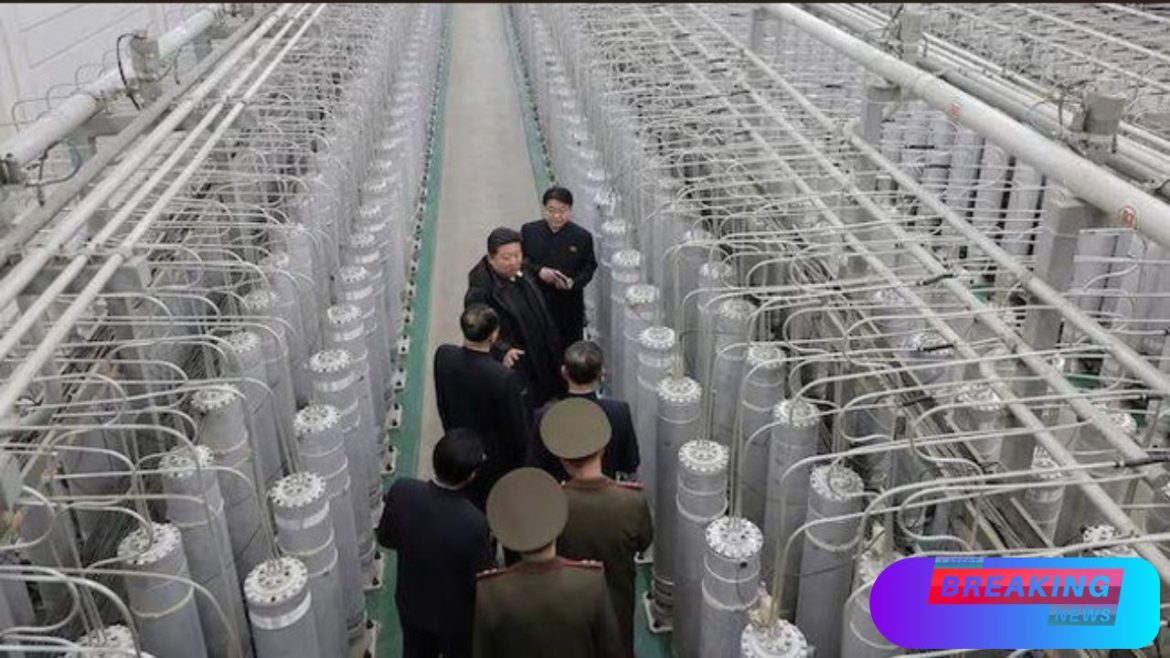
Nuclear weapons require either plutonium or highly enriched uranium. Experts believe North Korea is pursuing both pathways. Plutonium is produced in nuclear reactors and separated through reprocessing, while uranium enrichment relies on advanced centrifuges that increase the concentration of fissile isotopes.
Intelligence assessments suggest facilities such as Yongbyon remain central to this effort. Although Pyongyang has previously pledged to shut down or dismantle parts of its nuclear infrastructure, satellite imagery and expert analysis indicate ongoing operations. As a result, North Korea nuclear weapons production has likely become more efficient over time.
Strategic Intent Behind the Expansion
For Pyongyang, nuclear capability is viewed as essential to regime survival. Leader Kim Jong Un has repeatedly framed nuclear arms as a defensive shield against perceived external threats. Expanding material output allows North Korea to diversify its arsenal, develop smaller warheads, and maintain a credible second-strike capability.
Analysts argue that producing materials for up to 20 warheads annually does not necessarily mean all will be assembled immediately. Instead, it provides flexibility, enabling the regime to respond quickly if it decides to accelerate weaponization.
Regional and Global Security Implications
The potential scale of North Korea nuclear weapons production has serious implications for security in Northeast Asia. South Korea and Japan remain within range of North Korean missiles, while the United States views the program as a direct challenge to nonproliferation norms.
At the international level, institutions such as the United Nations continue to enforce sanctions aimed at curbing Pyongyang’s ambitions. However, enforcement gaps and geopolitical divisions have limited their effectiveness, allowing North Korea to advance key elements of its program.
Monitoring Challenges and Intelligence Estimates
Unlike missile launches, which are often public demonstrations, nuclear material production is largely covert. The International Atomic Energy Agency has had no on-site access to North Korean facilities for years, forcing analysts to rely on satellite data and secondary sources.
These constraints mean estimates vary, but many experts agree that North Korea’s output has increased steadily. The consensus view is that Pyongyang now possesses both the technical expertise and industrial capacity to sustain long-term production.
Diplomatic Stalemate and Policy Options
Efforts to negotiate limits on North Korea’s nuclear activities have stalled. Past talks focused on denuclearization have given way to more modest goals, such as arms control or risk reduction. Yet even these proposals face resistance, as Pyongyang demands security guarantees and sanctions relief.
Some analysts suggest that acknowledging the reality of North Korea nuclear weapons production could open the door to pragmatic engagement. Others warn that acceptance risks normalizing proliferation and weakening global norms.
What This Means Going Forward
The reported ability to produce materials for 10 to 20 nuclear weapons annually suggests North Korea is not slowing down. Instead, it is refining a program designed to endure for decades. This trajectory complicates deterrence calculations and raises the stakes for crisis management in the region.
As long as diplomatic channels remain limited and monitoring access restricted, North Korea nuclear weapons production will continue to be a central issue in global security debates. The challenge for the international community lies in balancing deterrence, diplomacy, and nonproliferation in the face of a steadily advancing nuclear state.