The Trump Greenland future deal refers to a tentative framework announced by former U.S. President Donald Trump that outlines how the United States and NATO might deepen strategic ties involving Greenland, a large Arctic territory governed by Denmark. The outline has drawn international attention because of its implications for regional security, sovereignty issues, and geopolitical competition in the Arctic.
Trump described the agreement as a “framework of a future deal” following talks with NATO Secretary-General Mark Rutte at the World Economic Forum in Davos, positioning it as a diplomatic solution to earlier threats over Greenland. Yet, significant uncertainty remains about what the deal actually entails—and whether it will satisfy all parties involved.
Historic Context: Trump’s Interest in Greenland
The United States’ interest in Greenland is not new and predates the current framework. Trump has previously suggested that Greenland should be part of the United States, citing its strategic importance, particularly in relation to Russia and China. Earlier proposals even included controversial ideas about purchasing the territory, which were rejected by Denmark.
Greenland remains an autonomous territory within the Kingdom of Denmark and is rich in geopolitical significance due to its location between North America and Europe, making it a key piece of the Arctic security landscape.
What the “Future Deal” Framework Includes
Trump announced the framework after backing away from earlier threats—such as tariffs on European allies opposing U.S. ambitions in Greenland—and threats of force. Instead, he portrayed the new deal as focusing on shared security goals rather than outright acquisition.
Official details remain vague, but the framework appears to contain several components:
- Enhanced U.S. military access or presence in Greenland beyond what has existed under the 1951 defense agreement with Denmark.
- Focus on Arctic security cooperation with NATO allies to counter geopolitical rivals.
- Discussions around infrastructure and defense projects, including U.S. interests in air and missile defense systems referenced by Trump.
What is not clear is whether the deal would affect Greenland’s governance or sovereignty. Danish and Greenlandic officials have insisted that any change to the territory’s status must involve their consent—and not be negotiated solely between the U.S. and NATO.
Sovereignty and Political Pushback
One of the core controversies is Greenland’s sovereignty. Greenland’s government and its Danish backers have repeatedly stated that the territory is not for sale and that decisions about its future must be made with Greenlandic participation.
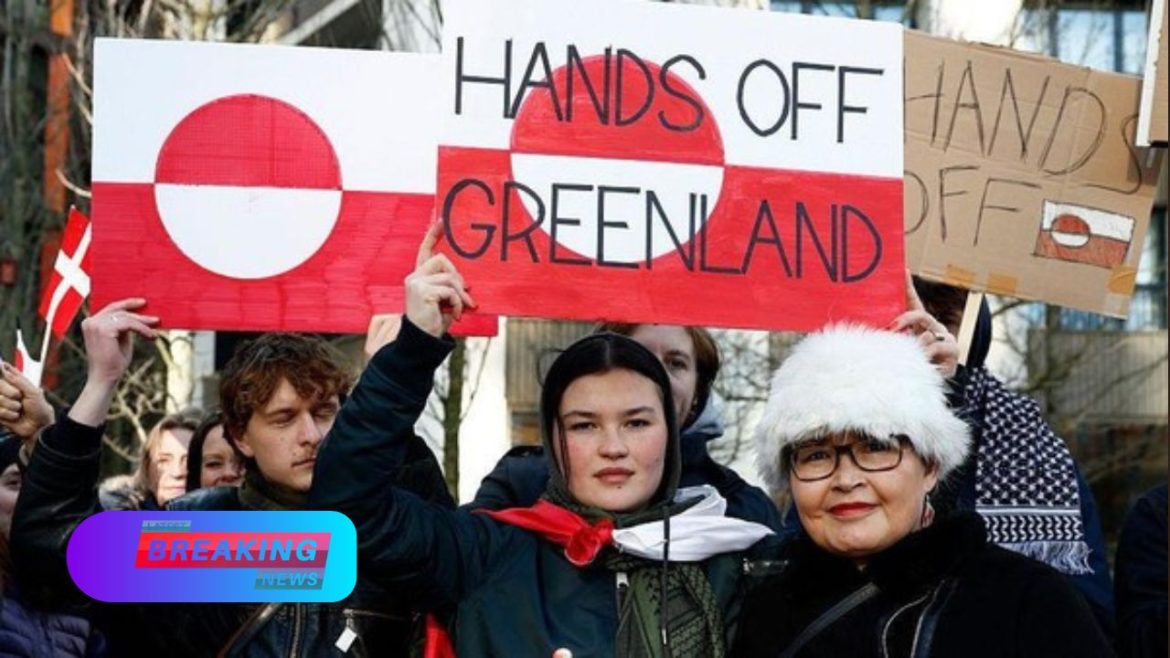
Protests have erupted both within Greenland and in Denmark under the slogan “Greenland is not for sale,” reflecting widespread opposition to any foreign control or influence beyond current arrangements.
European governments, including the United Kingdom and members of the EU, have signaled strong resistance to U.S. attempts to alter the political status of Greenland.
Strategic Importance of Greenland
Greenland holds strategic value for several reasons:
- Its location provides a critical vantage point for monitoring the Arctic and North Atlantic, especially amid rising military activities by Russia and China.
- It hosts existing U.S. military infrastructure under long-standing agreements.
- Melting Arctic ice is opening new shipping routes and increasing interest in the region’s natural resources.
Supporters of deeper U.S. engagement argue that increased cooperation would strengthen collective defenses against emerging threats, while critics warn that any unequal arrangement could undermine local autonomy and international law.
Diplomatic Dimensions
The Trump administration’s approach has been contentious. Initial threats—including tariffs on European allies who supported Danish defense interests in Greenland—strained relations with NATO partners. Trump ultimately abandoned those tariffs as part of the new framework announcement.
Diplomats, military officials, and analysts emphasize that any lasting agreement will require significant negotiation with Denmark and Greenland directly. There is broad consensus that U.S. aims in the Arctic should align with international norms and respect the wishes of local populations.
What the Future May Hold
As discussions continue into 2026, the Trump Greenland future deal remains a subject of intense debate. Central questions include:
- Will the framework lead to formalized agreements on defense cooperation?
- Can the United States secure greater influence without infringing on sovereignty?
- How will Greenlandic and Danish authorities shape the final outcome?
Observers believe the outcome could redefine Arctic geopolitics for years to come. For now, the framework stands as a high-level structure rather than a finalized pact, with specifics still under negotiation.
Conclusion
The Trump Greenland future deal is shaping up to be a complex geopolitical narrative involving national security, alliance politics, and the rights of autonomous regions. While the framework signals U.S. intent to have a larger role in the Arctic, Greenland and its allies continue to assert that ultimate decisions must respect sovereignty and international law.
As negotiations evolve, global attention will likely focus on whether this framework transitions into a concrete agreement that balances strategic interests with political realities in the North Atlantic.