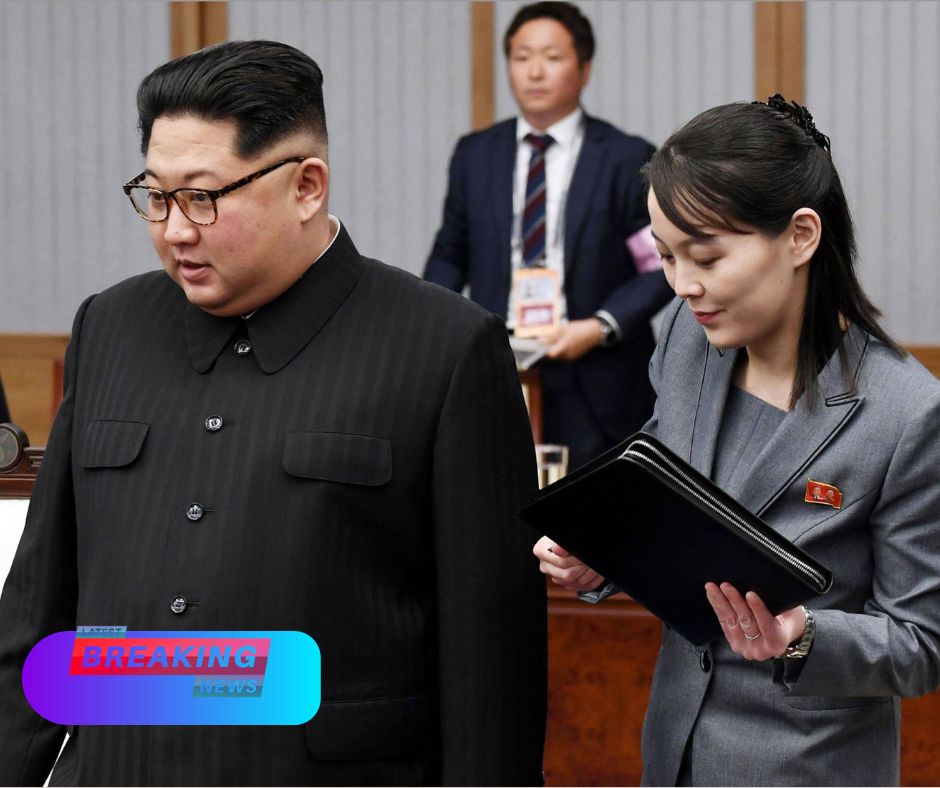
Kim Yo Jong drone allegations took center stage after the powerful North Korean official demanded South Korea clarify claims that unmanned aerial vehicles crossed into the North’s airspace. The confrontation adds another layer of strain to already fragile relations on the Korean Peninsula, where even minor incidents can quickly escalate into serious diplomatic crises.
Who Is Kim Yo Jong and Why Her Words Matter
Kim Yo Jong, the sister of North Korean leader Kim Jong Un, is one of the most influential figures in Pyongyang. As a senior party official, she often acts as the regime’s chief spokesperson on sensitive issues involving South Korea and the United States.
When she issues a public statement, it is usually a sign that the leadership wants to send a strong and carefully crafted message. Her demand for an explanation over the drone issue therefore carries significant political weight.
What North Korea Is Claiming
According to Pyongyang, several drones allegedly flew into its airspace from the South. North Korean officials say these unmanned aircraft violated sovereignty and posed a security threat. They argue that such actions could be considered hostile and provocative.
While details about the exact timing and location of the alleged incursions remain limited, the accusation itself has been enough to trigger a sharp response from Kim Yo Jong.
South Korea’s Position
Seoul has not publicly confirmed any deliberate drone flights into the North. South Korean authorities have stated in similar past incidents that many drones detected near the border were either civilian or related to routine surveillance within their own territory.
However, Pyongyang insists that any aircraft crossing the heavily guarded border is unacceptable, regardless of intent.
Why Drones Are Such a Sensitive Issue
Unmanned aerial vehicles have become a major tool in modern military and intelligence operations. They can collect images, monitor troop movements, and even carry weapons. On the Korean Peninsula, where the border is one of the most fortified in the world, any drone activity is seen as extremely dangerous.
Even a small UAV can be interpreted as an act of spying or preparation for an attack, which explains why North Korea reacted so strongly.
A Pattern of Rising Tensions
The drone dispute fits into a broader pattern of deteriorating relations between the two Koreas. In recent years, North Korea has ramped up missile tests, while South Korea has expanded military cooperation with the United States and Japan.
Each side views the other’s actions as threatening, creating a cycle of accusations and countermeasures.
Potential Diplomatic Fallout
Kim Yo Jong’s demand puts pressure on Seoul to respond. If South Korea denies the allegations, North Korea may accuse it of lying. If it admits any involvement, even accidental, Pyongyang could use that as justification for further military or political retaliation.
This delicate situation highlights how quickly technical incidents can turn into major diplomatic standoffs.
What Happens Next
Analysts expect South Korea to issue a cautious statement aimed at de-escalation, while maintaining that it respects international law and border agreements. Meanwhile, North Korea is likely to keep the issue alive in its state media to reinforce its narrative of being under constant threat.
Whether the drone issue fades or grows into a larger crisis will depend on how both sides choose to handle the next steps.
Conclusion
The Kim Yo Jong drone allegations episode shows just how fragile peace on the Korean Peninsula remains. A few unmanned aircraft, real or alleged, have once again pushed relations toward confrontation. As long as mistrust dominates the relationship between North and South Korea, even the smallest incident can become a flashpoint with serious regional implications.