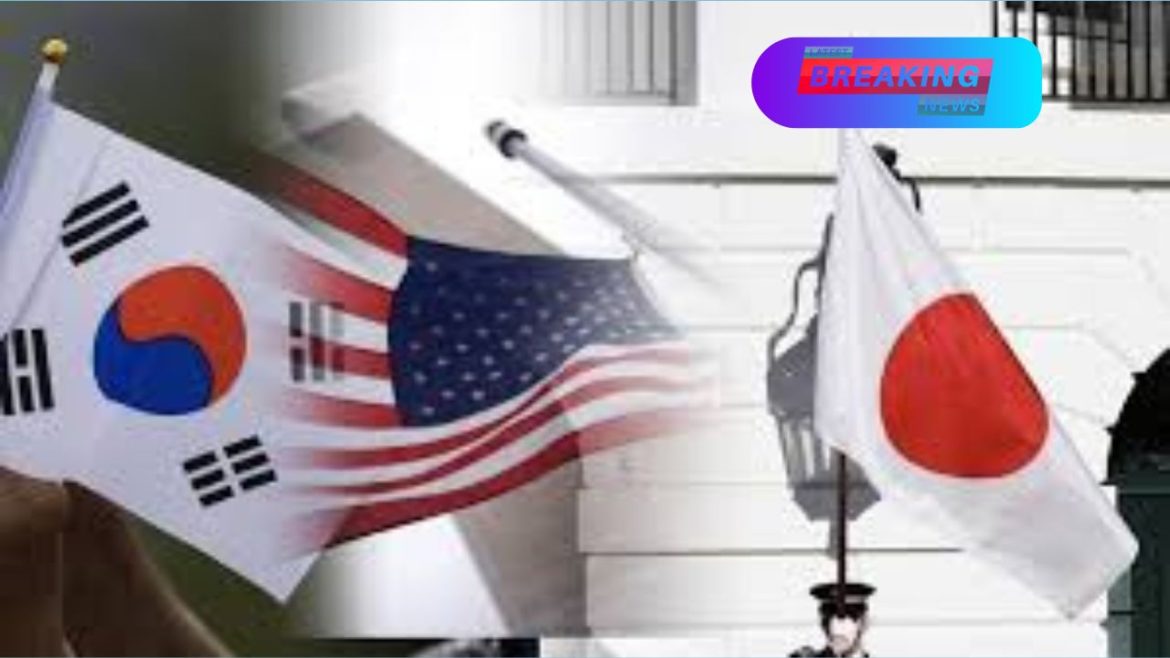
Japan South Korea US policy concerns are increasingly shaping diplomatic discussions in East Asia, as Tokyo and Seoul closely monitor signals coming from Washington. Officials and analysts in both countries suggest uncertainty over future American priorities is prompting a careful reassessment of long-standing assumptions about alliance reliability and regional strategy.
While the United States remains the cornerstone of security for both nations, recent policy debates and shifts in tone from Washington have raised questions about consistency, long-term commitments, and how allies should prepare for possible changes.
A Longstanding Alliance Under New Pressure
Japan and South Korea have relied on the United States for decades as a security guarantor, particularly in the face of regional threats. The US military presence in the region, coupled with defense treaties, has helped shape the post-war balance of power in East Asia.
However, policymakers in Japan and South Korea are increasingly aware that US foreign policy is influenced by domestic politics, shifting global priorities, and evolving views on alliance burden-sharing. This awareness has fueled quiet debates about how much strategic autonomy the two countries should pursue.
Signals From Washington That Raise Eyebrows
Concerns intensified as Washington appeared to send mixed messages on several fronts, from trade policy to defense commitments. Statements emphasizing “America First” thinking, alongside debates over military spending overseas, have left allies uncertain about how unwavering US support will be in future crises.
For Tokyo, questions center on whether Washington will maintain its firm stance on regional security challenges. For Seoul, uncertainty is compounded by the sensitive balance it must strike between its alliance with the US and its own regional diplomacy.
The North Korea Factor
One major driver of caution is the persistent challenge posed by North Korea. South Korea, in particular, depends heavily on US deterrence as it navigates relations with Pyongyang. Any hint of reduced American engagement naturally triggers anxiety in Seoul’s policy circles.
Japan shares similar concerns, viewing regional stability as closely tied to consistent US involvement. Analysts in Tokyo warn that ambiguity in US policy could embolden rival actors or complicate crisis management across the region.
Economic and Trade Dimensions
Beyond security, Japan South Korea US policy worries extend into economic territory. Trade disputes, tariff policies, and technology restrictions have demonstrated how quickly economic relations can become politicized.
Japan, a major US trading partner, has had to adapt to evolving American trade strategies, while South Korea remains cautious about how shifts in US economic policy might affect its export-driven economy. Both countries increasingly see economic resilience as part of national security planning.
Quiet Moves Toward Strategic Hedging
In response to uncertainty, Tokyo and Seoul are exploring ways to diversify their diplomatic and security options without undermining the US alliance. This approach, often described as strategic hedging, includes strengthening regional partnerships and enhancing domestic defense capabilities.
Japan has taken steps to reinterpret defense policies and invest in new capabilities, signaling a desire for greater self-reliance. South Korea, meanwhile, continues to expand its defense industry and deepen ties with other partners, even as it maintains close coordination with Washington.
Regional Implications in East Asia
The cautious stance adopted by Japan and South Korea has broader consequences for East Asia. Regional actors are closely watching how US allies respond to perceived shifts in American policy, as their choices could influence the overall balance of power.
If allies move toward greater autonomy, it may encourage more multipolar dynamics in the region. Conversely, renewed clarity and commitment from Washington could reinforce existing alliance structures and ease concerns in Tokyo and Seoul.
Managing Alliance Expectations
Officials in both countries emphasize that caution does not equate to abandonment of the alliance. Instead, it reflects pragmatic planning in an unpredictable global environment. Japan and South Korea continue to engage actively with US counterparts, seeking reassurance and clearer communication.
Diplomatic channels remain open, and trilateral cooperation among Tokyo, Seoul, and Washington is still seen as essential. Yet behind closed doors, discussions increasingly focus on contingency planning and long-term resilience.
What Comes Next for the US and Its Allies
The future of Japan South Korea US policy relations will depend heavily on how Washington articulates and implements its foreign policy vision. Consistency, transparency, and engagement with allies are likely to determine whether current unease deepens or fades.
For now, Tokyo and Seoul appear committed to a balanced approach: sustaining strong ties with the United States while preparing for a world in which alliances may need to adapt. This cautious recalibration underscores a broader reality in global politics, where even the closest partners must plan for uncertainty.